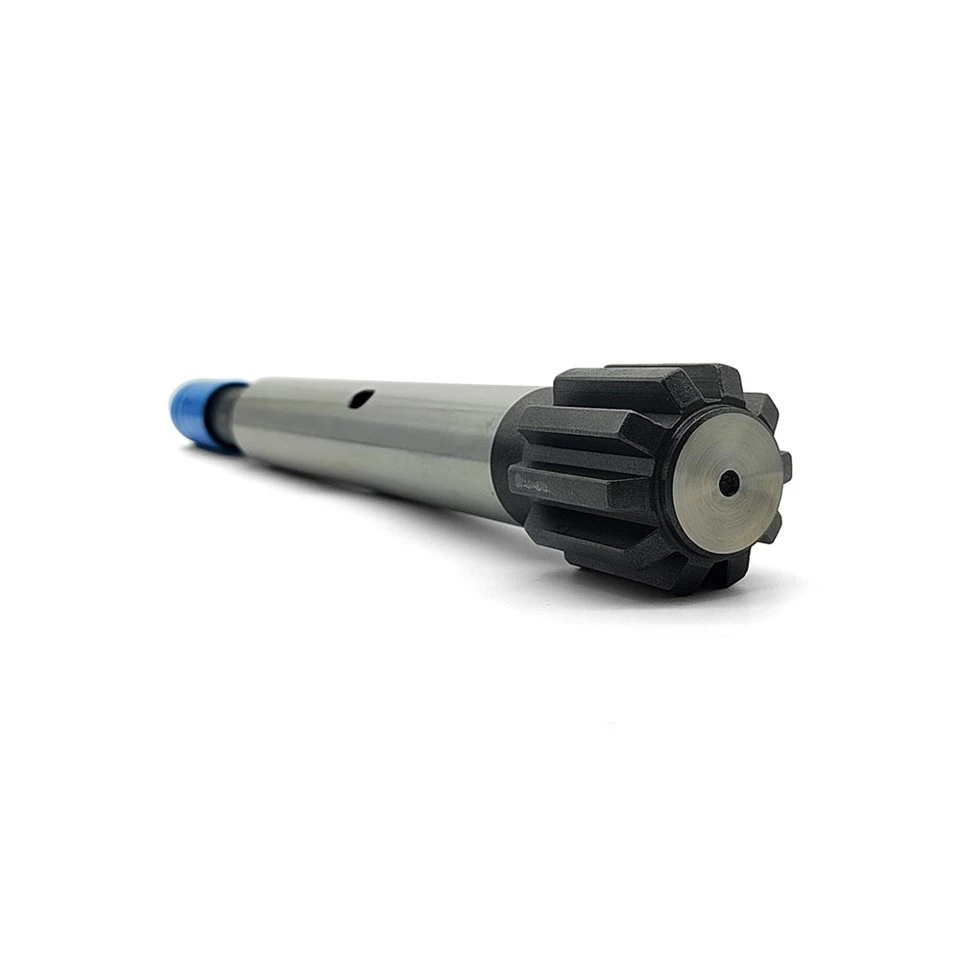
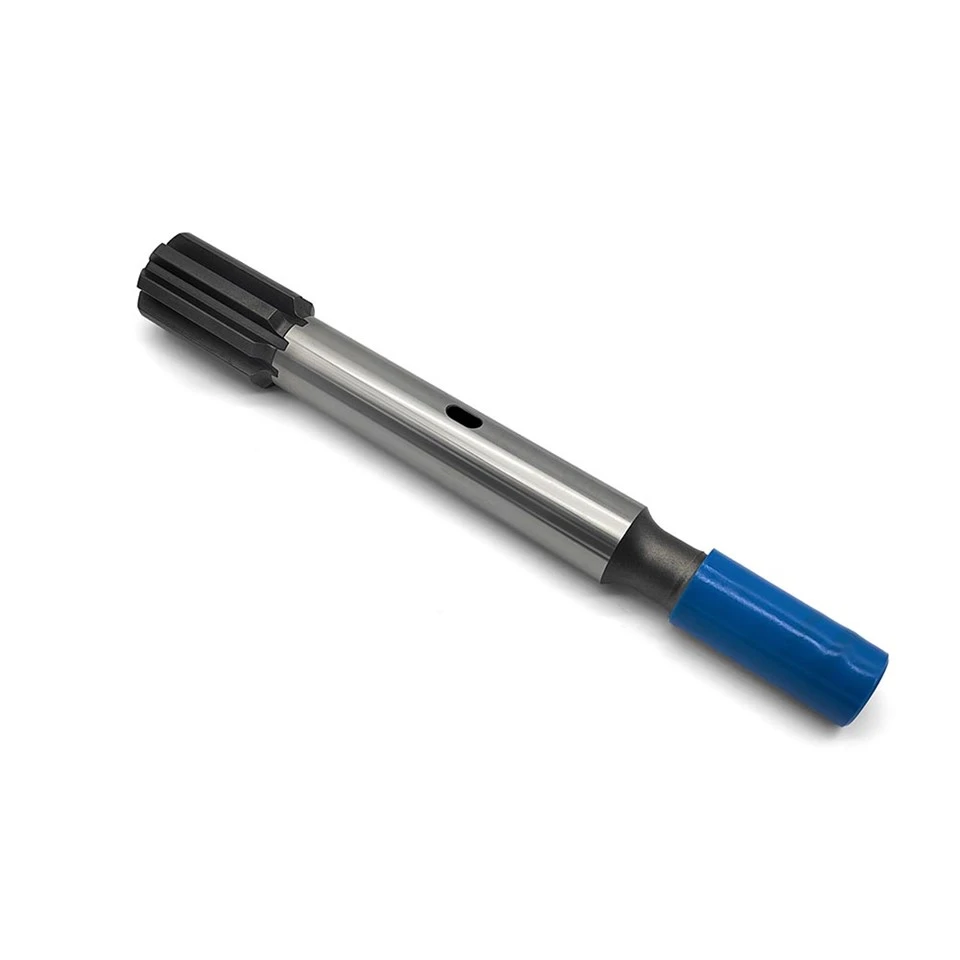
When working with tophammer drilling tools, many drilling professionals focus on drill bits and extension rods. These parts are replaced frequently and are easy to see on-site. Yet few fully understand the shank adapter, a critical power-transmission component sitting between the rock drill and drill string. Simply put, the shank adapter is the backbone of your percussive rock drilling system. If you want stable drilling performance and longer service life for your entire tool set, there is a lot you need to learn about shank adapters.
What Is a Shank Adapter and How Does It Work?
A shank adapter is a forged alloy steel component specially designed for tophammer rock drills. It receives high-frequency impact blows from the rock drill piston on its striking face and transfers impact energy and rotational torque to the connected drill rods and button bits. A central flushing hole runs through the body of the shank adapter, delivering compressed air or water to flush rock cuttings out of the borehole during drilling.
The spline section on the shank adapter catches rotation force from the rock drill chuck, while the threaded end connects to the drill string. Every blow creates cyclic shock and torsional stress. This means the shank adapter bears the harshest load among all tophammer drilling tools. Any defect in this part will directly reduce penetration speed and cause unexpected downtime.
Core Materials & Manufacturing Standards
High-performance shank adapters are forged from premium alloy steel such as 42CrMo. Forging eliminates internal voids and improves metal grain structure, which is essential for resisting fatigue cracks. After rough machining, parts go through precise heat treatment including quenching and tempering. This process creates a hard, wear-resistant surface for splines and threads while maintaining high toughness in the core. The balance between hardness and toughness prevents sudden brittle fracture under repeated impact.
Low-cost shank adapters often skip strict heat treatment or use inferior steel. They may look identical at first glance, but they wear quickly or crack prematurely under heavy rock drilling. Reliable manufacturers perform non-destructive testing to detect hidden micro-cracks before shipment. Common thread specifications include T38, T45, T51, R32 and R38 to match mainstream rock drill brands.
Key Criteria for Choosing the Right Shank Adapter
Compatibility comes first. The spline profile, overall length, striking face dimension and thread type must match your rock drill model perfectly. Even tiny dimensional mismatches create misalignment, uneven stress and accelerated wear on both the shank adapter and rock drill chuck. Always provide your rock drill model and working conditions to your supplier before ordering.
Second, match the shank adapter to your rock formation. Standard models work well for medium-hard rock in quarrying. For highly abrasive hard rock, select upgraded versions with enhanced surface treatment. Borehole depth and feed pressure are also important factors for your selection. Deep-hole drilling requires shank adapters with superior concentricity to minimize vibration.
Common Failure Modes & Maintenance Advice
The most frequent shank adapter failures include spline galling, thread seizure, fatigue cracking and striking face chipping. The leading triggers are incompatible parts, excessive feed force, poor thread lubrication and worn rock drill pistons or chucks.
Simple daily maintenance can drastically extend service life. Inspect the striking face, splines and threads for cracks, deformation or wear marks before every shift. Apply copper or molybdenum-based thread grease during assembly to avoid metal-to-metal galling. Keep threads and splines clean from rock dust and grit. Avoid overfeeding, which creates side load and vibration on the drill string. If you spot micro-cracks, stop using the shank adapter immediately; continued operation may damage your expensive rock drill.
Final Thoughts
Shank adapters may seem like a small accessory within tophammer drilling tools, but their impact on overall drilling efficiency cannot be overstated. Understanding its function, material standard, selection rules and maintenance helps contractors cut operational costs and reduce unplanned downtime.
Whether you are involved in quarrying, underground mining, tunneling or slope anchoring, investing in well-made, properly matched shank adapters is a cost-effective strategy. If you need technical drawings, dimension sheets or bulk supply of shank adapters and complete tophammer drilling tools, contact our engineering team for customized solutions.