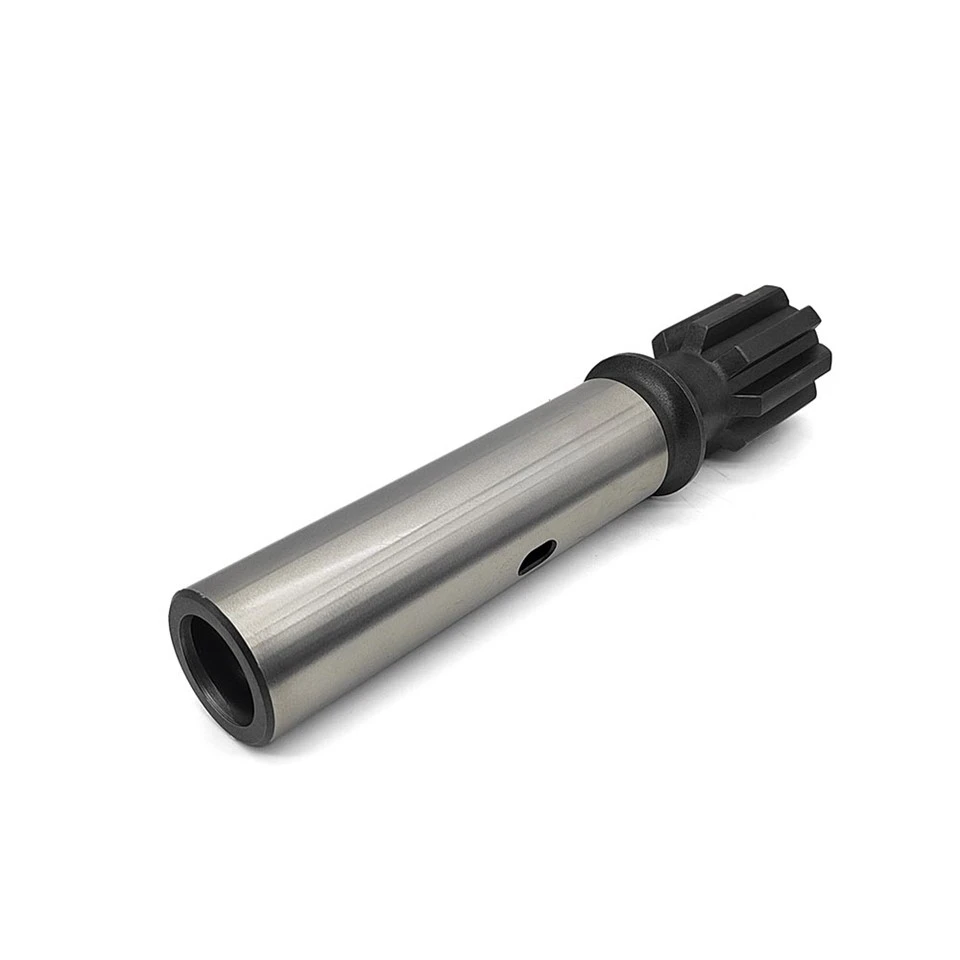
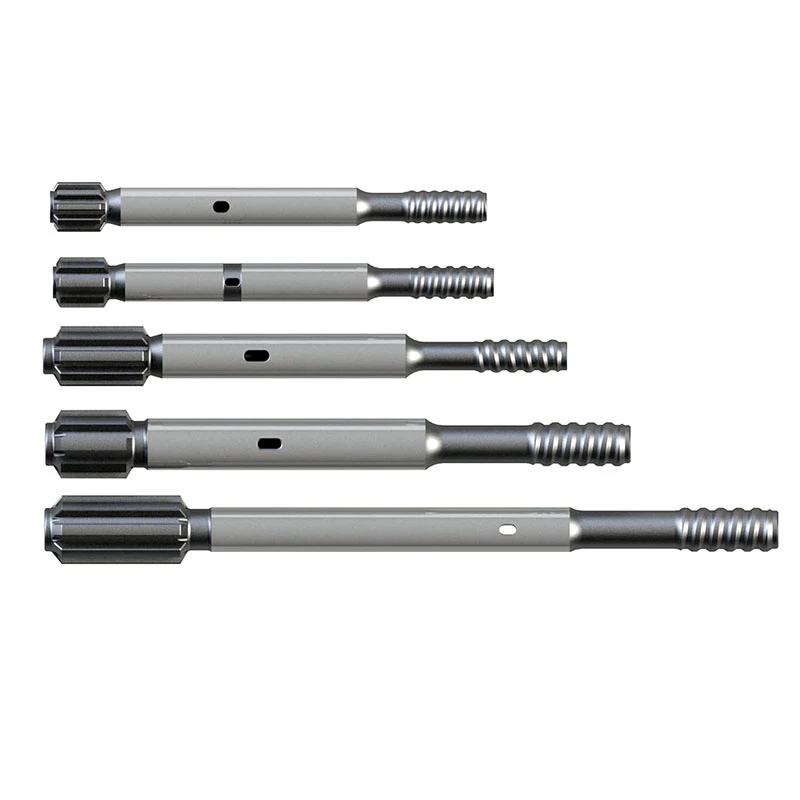
Top hammer drilling is widely used in quarrying, underground mining, slope anchoring and tunneling projects. The whole set of tophammer drilling tools includes drill bits, drill rods, couplings and shank adapters. Many drilling contractors spend plenty of time comparing drill bits and rods, yet overlook the shank adapter. As the component that connects the rock drill to the drill string, it transfers impact energy and rotation torque continuously. A mismatched or low-quality shank adapter will cause energy loss, frequent tool breakage and unexpected downtime, raising your drilling cost per meter.
If you want to maximize the performance of your tophammer drilling tools, here are 5 key tips for selecting a reliable shank adapter.
Tip 1: Confirm Full Compatibility with Your Rock Drill and Thread Specification
Compatibility is always the first priority when purchasing a shank adapter. The shank adapter's spline profile, striking face dimension and overall length must match your rock drill model, such as Epiroc, Sandvik or Furukawa machines. Besides the drill rig, thread standard is another critical factor. Common thread types include T38, T45, T51, R32 and R38.
Never mix different thread series. A slight mismatch will lead to thread galling, spline wear and poor energy transmission. Even if the shank adapter looks similar visually, inconsistent thread pitch or profile will damage your expensive rock drill chuck and the whole drill string. Before placing an order, provide your rock drill model and thread size to the tool supplier for technical verification.
Tip 2: Check Raw Material and Heat Treatment Process
Shank adapters suffer repeated high-frequency impact and torsional load during drilling. Premium products are forged from high-grade alloy steel like 42CrMo. The raw material alone cannot guarantee performance; professional heat treatment is equally essential. A qualified shank adapter goes through quenching and tempering processes. The surface achieves high hardness for wear resistance, while the core maintains good toughness to resist fatigue cracking.
Poor heat treatment is the leading cause of early failure. If the hardness is too high, the shank adapter becomes brittle and cracks under impact. If hardness is insufficient, splines and threads wear quickly. Ask your supplier for material test certificates and heat treatment reports for bulk orders, especially for large mining and quarry projects.
Tip 3: Match the Shank Adapter to Rock Conditions and Drilling Parameters
Rock hardness and abrasiveness directly decide how much load your tophammer drilling tools bear. For medium-hard rock, standard shank adapters work well. For highly abrasive hard rock, you need upgraded shank adapters with enhanced surface treatment to extend service life.
You also need to consider borehole depth and feed pressure. Deep holes require stable torque transfer, so choose precision-machined shank adapters with better concentricity. Avoid over-specifying or under-specifying your shank adapter. Over-engineered models bring unnecessary cost, while under-rated parts break frequently and interrupt your blasting or anchoring work.
Tip 4: Inspect Machining Precision and Surface Quality
Precision CNC forging and machining determine the contact quality of splines, striking face and threads. The striking face must be flat and smooth. Uneven surfaces concentrate impact stress and trigger chipping. Threads need clean, uniform teeth without burrs, scratches or deformation.
Visible defects are warning signs. Tiny cracks on splines or thread roots will expand rapidly under cyclic shock. Reputable manufacturers carry out non-destructive testing to detect hidden internal cracks before delivery. For bulk procurement, you can request sample inspection before mass shipment.
Tip 5: Evaluate Supplier's Technical Support and After-Sales Service
A good shank adapter supplier does not only sell tophammer drilling tools. Reliable vendors can offer technical drawings, dimension sheets and professional advice for your drilling scenarios. They can help you troubleshoot common problems such as spline abrasion and thread seizure during field operation.
For contractors operating in Central Asia, the Middle East and Africa, stable lead time and consistent product quality matter greatly. Avoid suppliers with unstable quality even at lower prices. Frequent replacement of broken shank adapters will cost more in downtime and labor than the tool itself.
Final Thoughts
The shank adapter is the power bridge of your entire tophammer drilling tools set. A wrong selection will reduce penetration rate and increase operating costs. By checking compatibility, material & heat treatment, rock condition matching, machining quality and supplier capability, you can pick durable shank adapters that fit your drilling projects perfectly. Investing in quality shank adapters reduces unplanned downtime and cuts your total drilling cost over time.
If you need technical data or bulk supply of shank adapters and full tophammer drilling tools, feel free to contact our engineering team.