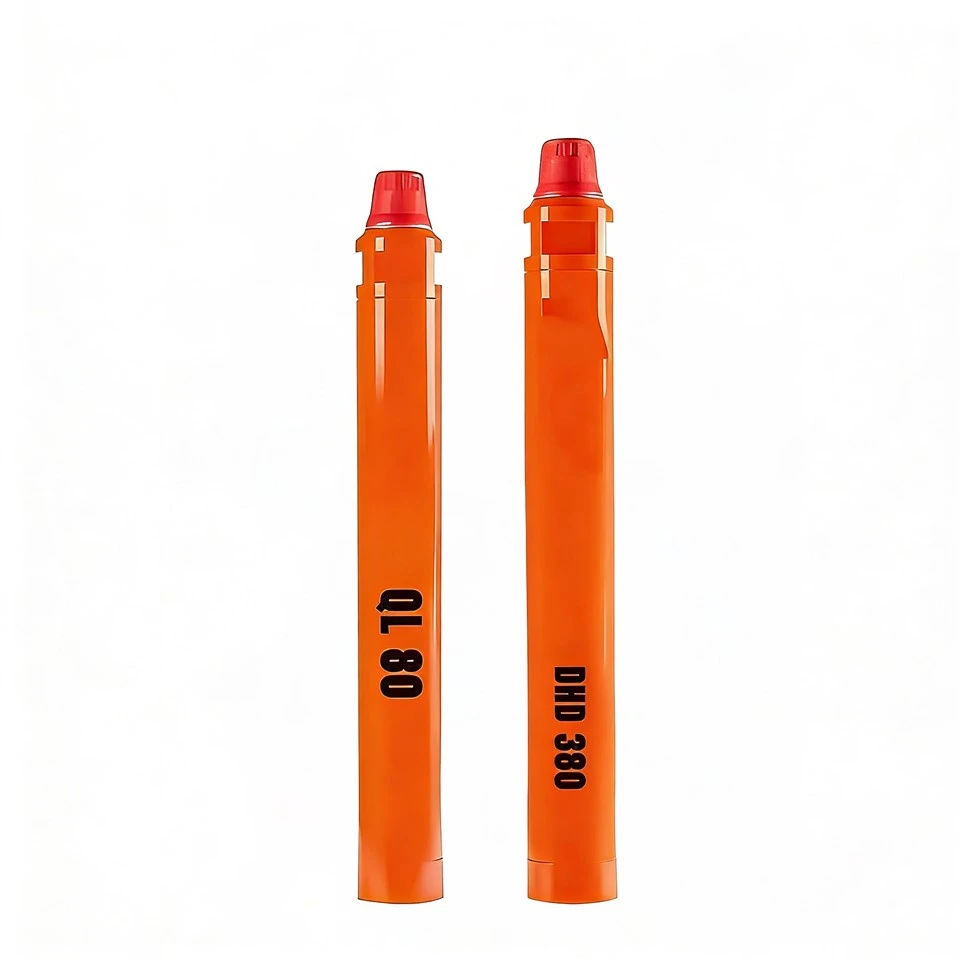
Down-the-Hole (DTH) hammers are essential tools in the drilling industry, valued for their outstanding efficiency across a wide range of drilling projects. As a supplier of DTH hammers, we see every day how these robust tools transform drilling operations. In this blog, we break down the inner workings of DTH hammers, covering their key components, operating principles, core benefits and product options.
Components Of A DTH Hammer
A DTH hammer relies on several core components, and each part performs a critical function:
Piston: The piston is the heart of the DTH hammer. It reciprocates rapidly inside the hammer casing and generates the impact energy to crush rock. Driven by compressed air fed down through the drill string, it delivers repeated blows onto the drill bit shank.
Valve System: The valve system controls compressed air distribution inside the hammer. It routes air to separate air chambers to create pressure differences, driving the piston back and forth. A well-designed valve ensures stable, consistent impact strokes.
Hammer Body (Casing): The heavy-duty casing encloses the piston, valve assembly and other internal parts. It is engineered to withstand extreme pressure and percussive loads during drilling. It also connects the drill bit at the bottom and the drill string on top.
Drill Bit: Mounted to the bottom of the hammer, the DTH bit directly breaks rock. Bits are available in many diameters and button layouts matched to rock conditions. The working surface is fitted with tungsten carbide buttons for superior wear resistance.
Operating Principles Of A DTH Hammer
DTH hammers run on pneumatic energy. Compressed air travels down the drill string into the hammer body. The valve assembly redirects air alternately between upper and lower chambers, pushing the piston to cycle up and down.
On the forward stroke, the piston strikes the bit shank at high speed. Kinetic energy transfers through the bit's carbide buttons to fracture the rock. After impact, the valve switches airflow. Spent air is exhausted, and the piston returns to its starting position. The cycle repeats hundreds of times per minute.
Exhaust air also serves a second key purpose: it flushes rock cuttings out of the borehole through the annulus between drill pipe and hole wall. Impact frequency and striking power depend on air pressure, piston weight and valve design. Operators tune these parameters to match different rock formations for optimal penetration.
Advantages Of Using DTH Hammers
High Penetration Rates in Hard Rock: DTH hammers deliver impact force directly at the hole bottom. Unlike top hammer systems, impact energy does not travel along long drill rods, so energy loss is minimal. This makes DTH far faster for hard rock such as granite.
Deep Hole Performance: DTH maintains steady penetration even at greater depths, a major advantage for deep water wells and exploration drilling.
Wide Versatility: DTH hammers fit mining, quarrying, construction, water well and geothermal drilling. They handle formations ranging from soft weathered rock to dense hard rock.
Simple Operation & Maintenance: DTH designs are relatively straightforward. Field teams can disassemble, inspect and service hammers with basic training, reducing unexpected downtime.
Different Sizes Of DTH Hammers
We supply a full lineup of DTH hammers to suit varied project requirements. Our popular models include:
3-inch DTH Hammers: Lightweight and portable, widely used for small water wells and geotechnical investigation, paired with compact drill rigs.
6-inch DTH Hammers: Larger piston delivers higher impact energy. Ideal for medium and large projects in mining, quarrying and civil construction.
8-inch DTH Hammers: Heavy-duty high-power hammers for tough hard rock and large-scale mining excavation.
RC DTH Hammers
Beyond conventional DTH hammers, we also provide Reverse Circulation (RC) DTH hammer systems. RC drilling is a specialized exploration method built around a dual-wall hammer and drill string for continuous geological sampling.
The outer tube carries compressed air downhole. Airflow lifts rock cuttings up through the inner tube to the surface instead of the outer annulus. Samples are recovered continuously, without contamination. This makes RC DTH hammers indispensable for mineral exploration, where reliable core/cuttings sampling supports resource assessment.
Conclusion
DTH hammers are robust, high-productivity drilling tools for rock-breaking applications. Understanding their structure and working mechanism helps drilling crews select the right tools and set operating parameters correctly to boost overall efficiency.
Our team focuses on supplying premium DTH drilling tools and reliable after-sales support. If you are sourcing DTH hammers, bits or RC drilling equipment, feel free to contact us for technical advice and quotation. We are ready to support your drilling projects.