

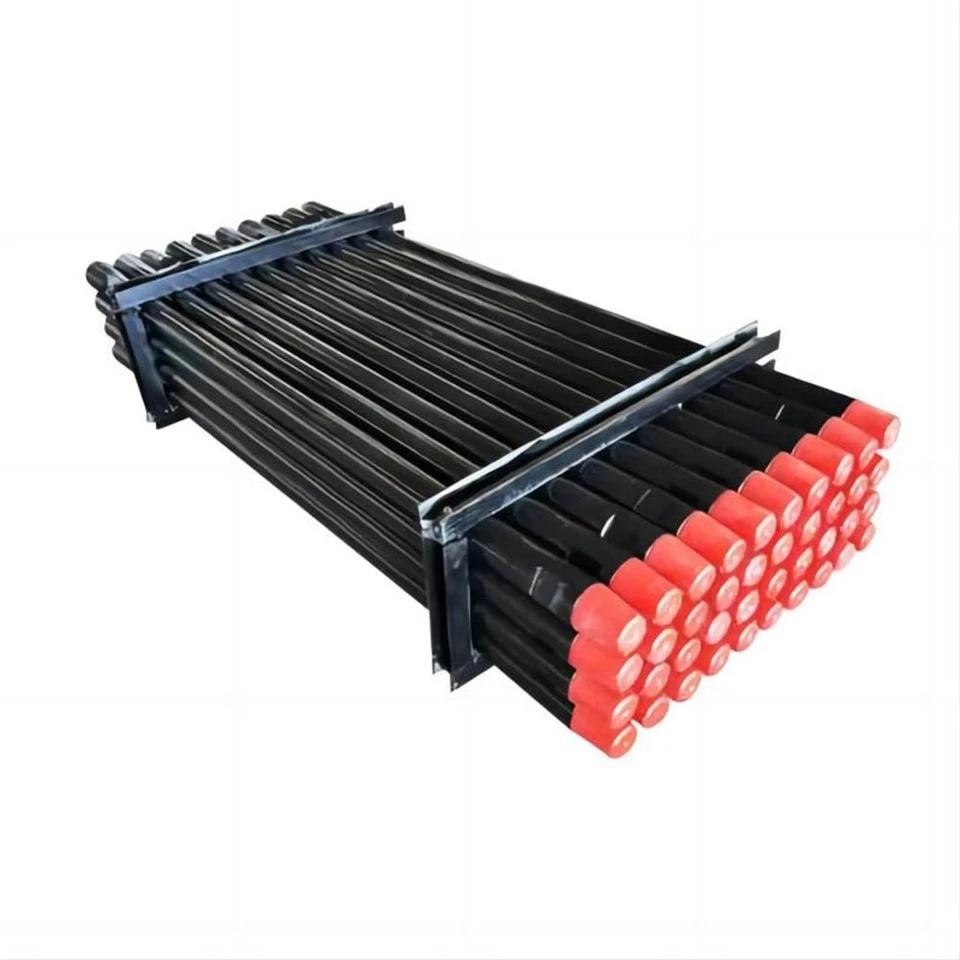
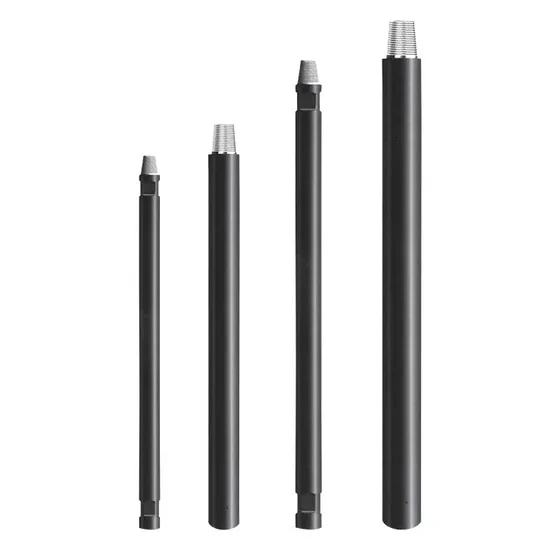
Many drilling operators are familiar with DTH drilling's fast penetration and excellent hard-rock performance, yet few fully understand the core role of the DTH drill pipe. Unlike ordinary drill rods that only transfer mechanical power, DTH drill pipes undertake three critical missions: air transmission, torque delivery, and cuttings flushing. It is the unsung backbone of every efficient down-the-hole drilling project. Today, we will break down its simple but powerful working principle in plain terms.
The Core Position of DTH Drill Pipe in Drilling Systems
DTH drilling differs completely from top-hammer drilling. In top-hammer systems, impact force is generated on the rig surface and transmitted down through the drill string. In DTH operations, the pneumatic hammer sits directly at the bottom of the borehole, right above the drill bit. The DTH drill pipe connects the surface drilling rig to the down-hole hammer, forming the entire working drill string. Without qualified DTH drill pipes, the down-hole hammer cannot operate, and rock breaking becomes impossible.
Three Core Working Functions Explained
1. Transmit High-Pressure Compressed Air
This is the most unique and vital function of DTH drill pipes. Every standard DTH drill pipe is designed with a hollow inner channel. The air compressor on the ground continuously delivers high-pressure air through this inner passage straight to the down-hole DTH hammer. The compressed air drives the internal piston of the hammer to perform high-frequency reciprocating strikes, generating powerful impact force to crush hard rock. This direct air transmission ensures minimal energy loss and stable down-hole power output.
2. Transfer Rotational Torque
Apart from air transmission, torque transfer is another indispensable function of DTH drill pipes. While the underground hammer provides impact power to break rock, the surface drilling rig generates steady rotational force. The robust threaded connections of DTH drill pipes lock the entire drill string tightly, transferring torque down to the DTH hammer and drill bit. Continuous and uniform rotation ensures the drill bit strikes rock evenly around its face, preventing eccentric wear, hole deviation and irregular borehole shapes. This stable rotational performance guarantees straight, standardized blast holes and exploration holes for mining, quarrying and water well projects.
3. Deliver Cuttings Flushing and Hole Stability
DTH drill pipes also support the critical hole-cleaning process that keeps drilling smooth. After powering the down-hole hammer, the compressed air exhausts upward through the annular gap between the outer wall of the drill pipe and the borehole wall. The high-speed airflow instantly carries away rock dust, debris and broken cuttings produced during rock crushing. Effective flushing avoids cuttings accumulation, bit jamming and repeated grinding of rock fragments, which greatly reduces bit wear and maintains continuous drilling progress. Without reliable flushing supported by qualified DTH pipes, drilling efficiency will drop sharply, and tool failure risks will increase significantly.
Complete Working Cycle of DTH Drill Pipe
The entire working principle of a DTH drill pipe forms a complete, synchronized cycle. First, the on-site air compressor generates high-pressure air, which flows through the hollow inner cavity of the DTH drill pipe to activate the down-hole hammer. The hammer creates high-frequency impact force to fracture hard rock. Meanwhile, the drill pipe transmits rotational torque to rotate the drilling assembly evenly. Finally, return air flushes cuttings out of the borehole. Every section of DTH drill pipe works coordinately to ensure efficient, stable and continuous rock drilling.
Why High-Quality DTH Drill Pipes Matter
All three core functions rely heavily on pipe quality. Premium DTH drill pipes adopt high-strength alloy steel and precision machining. Their smooth inner walls minimize air pressure loss, ensuring the hammer gets sufficient power output. Accurate thread connections prevent air leakage and string loosening under high torque and impact. Excellent overall mechanical strength resists torsion, compression and underground abrasion, avoiding pipe deformation, breakage and unexpected downtime. Low-quality pipes often cause insufficient air pressure, unstable rotation and poor flushing, seriously restricting drilling performance.
Conclusion
The DTH drill pipe is far more than a simple connecting component. It undertakes air transmission, torque delivery and hole cleaning, serving as the core carrier of the entire DTH drilling system. Understanding its working principle helps drilling operators select suitable pipe specifications, reduce tool loss and improve overall project efficiency. If you are looking for durable, high-precision DTH drill pipes for your mining, quarrying or water well drilling projects, contact us for reliable products and professional technical guidance.