

Hey there, folks! I'm a button bit supplier, and today I wanna have a chat about how the button bit's diameter affects its drilling ability. It's a topic that's super important in the drilling industry, and I'm excited to share my insights with you.
When selecting rock-drilling tools for mining, quarrying, tunnelling or construction projects, most operators focus on carbide grade, bit face design and connection type. Yet one fundamental parameter - button bit diameter - exerts a huge influence over overall drilling performance, hole quality, equipment load and operating costs. Getting this dimension right is critical for safe, efficient and cost-effective field operations.
The most straightforward effect of bit diameter is the finished borehole size. The outer diameter of a button bit directly determines the diameter of the hole it drills. Large-diameter button bits are widely used for production blast holes in open-pit mining and major civil-engineering works. They displace large volumes of rock in a single pass and help raise overall site productivity. In contrast, smaller-diameter button bits are preferred for narrow-space tunnelling, geological exploration and secondary blasting. They deliver tighter dimensional control and work well in confined working conditions where large bits cannot reach.
Diameter also changes drilling dynamics and penetration performance. At the same rotary speed, a larger-diameter bit achieves higher peripheral line speed. However, its larger rock-contact area generates greater friction and places higher demand on impact energy and torque output from the drill rig. As a result, the rate of penetration often decreases even though peripheral cutting speed rises. Operators need to balance rig power against bit size; forcing an over-large bit on under-powered equipment will lead to slow advance, excessive vibration and accelerated tool wear.
Hole stability is another key factor affected by bit size. Larger-diameter button bits have a wider contact footprint against rock. This improved balance reduces bit wander, helping keep boreholes straight, which is especially vital for deep-hole drilling. Deviated blast holes can compromise blasting results and create safety risks. Small-diameter bits, while more agile, are more prone to drifting off-course without proper guiding components such as pilot adapters.
Rock hardness must be considered alongside bit diameter. For extremely hard, abrasive formations like granite, smaller-diameter bits concentrate impact force onto a limited contact area, improving rock fragmentation efficiency. In softer rock conditions, larger bits can be used more productively, provided the drilling rig can supply sufficient torque and impact energy. Mismatching diameter to rock hardness wastes machine power and shortens service life of both bits and drill-string components.
Diameter also drives cost. Larger button bits consume more alloy steel and tungsten-carbide buttons during manufacturing, so their unit price is naturally higher. Moreover, larger bits put higher stress on shank adapters, drill rods and other consumables, raising overall operational expenditure. Choosing the largest available bit is not always the best strategy; operators should match bit diameter to project objectives, rock conditions and rig capacity.
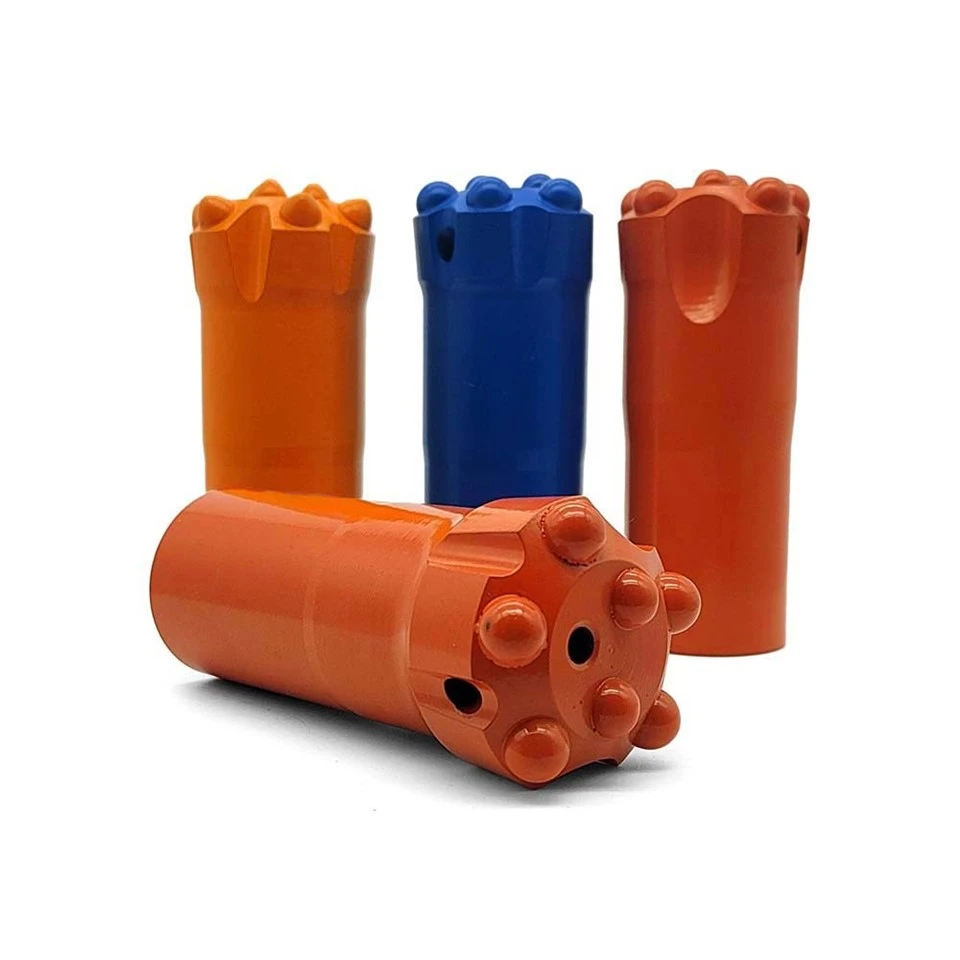
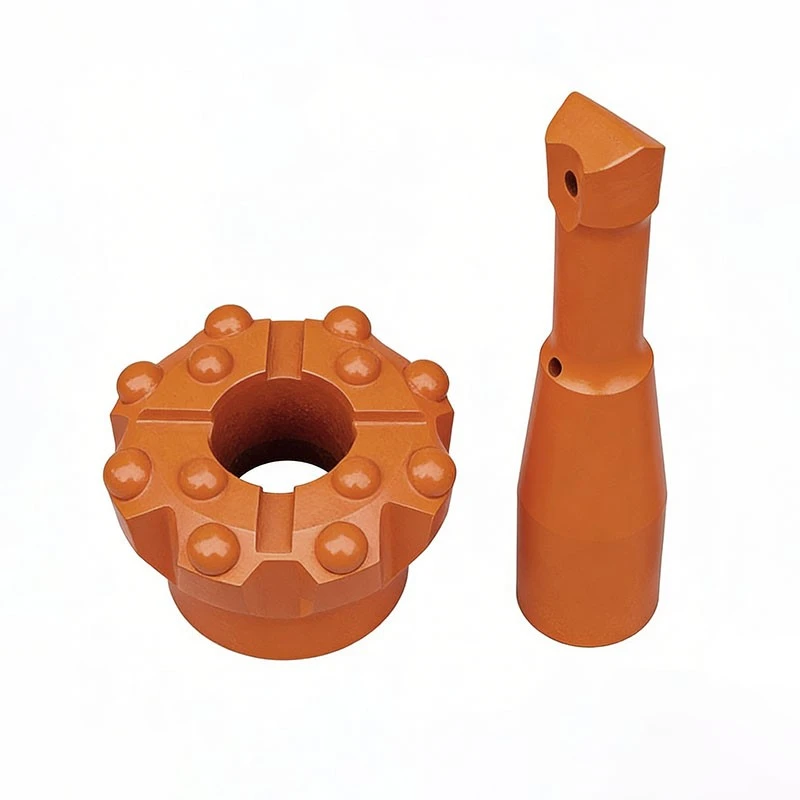

To sum up, button-bit diameter is far more than just hole-size specification. It shapes penetration rate, hole straightness, equipment loading, tool lifespan and total project cost. Before placing orders, confirm your required borehole dimension, rock type and drilling-rig parameters. If you need technical support in selecting suitable button bits for your working conditions, consult us to achieve reliable and high-efficiency drilling results.